
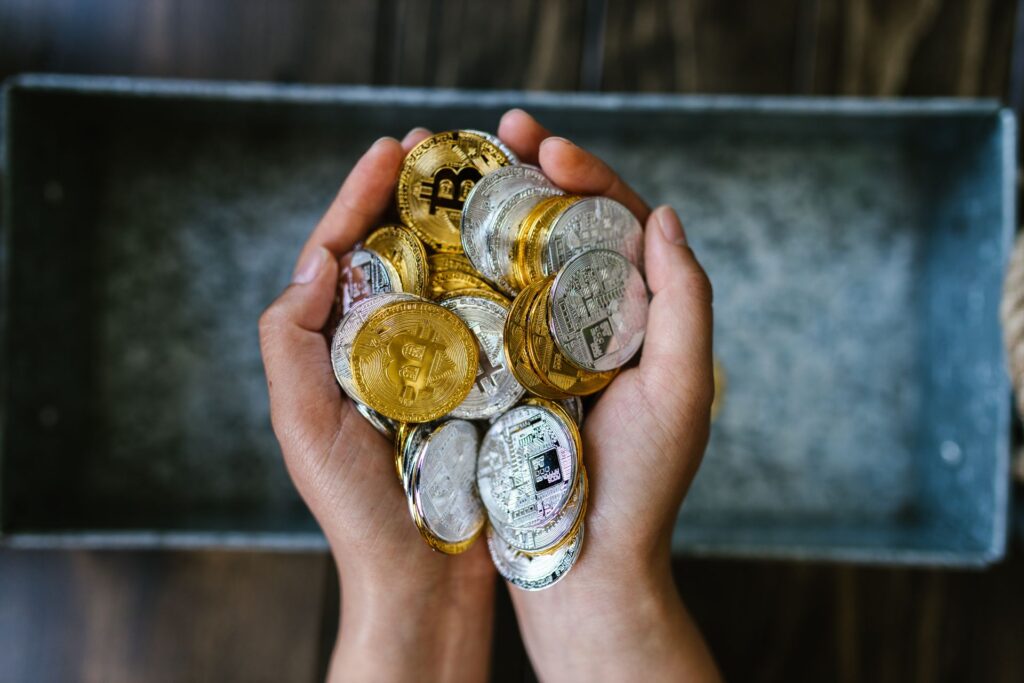
Picture a vault whose contents have grown 83-fold in under six years. At the end of September 2026, 43.4 million ETH are staked on Ethereum, which is 82.8 times the 524,288 ETH required to launch the chain in December 2020 (43,400,000 ÷ 524,288 ≈ 82.8) (¹). More than one ether in three now works to secure the network. What about yours? Your crypto may be sitting in a wallet, producing nothing. Staking promises to put it to work. Still, you need to know what you are agreeing to in return. Staking, stacking, proof of stake, delegation: the jargon puts people off. Behind it lies a simple idea, first floated on a forum in 2011.
Key takeaways
📋 Index
- Staking locks up crypto to help secure a proof-of-stake blockchain.
- The idea dates from July 2011; Peercoin applied it in 2012.
- Ethereum, Solana, Cardano, Cosmos, Polkadot: exit delays and penalties differ.
- Solo, delegation, exchange or liquid staking: who holds the keys?
- Rewards come in tokens: a price drop can wipe them out.
Crypto staking, a reward for guarding a network
Let’s start with the word. A stake is what you put on the table: your wager, your share of the risk. Staking means committing funds to earn the right to take part. The poker comparison ends there. Here, the game rewards honesty.
In practice? You lock up tokens on a blockchain. The network then hands you, directly or through a validator, a share of the work of checking transactions. It pays you rewards in proportion to your stake. Cheating costs dearly: part of the committed funds can be destroyed.
Investors have a name for this logic. Skin in the game describes someone who bears the consequences of their own decisions. Staking hard-codes that principle. The validator has something to lose. So it validates properly.
Proof of stake, the hidden engine of staking
Every blockchain faces the same puzzle: how do thousands of computers that don’t know each other agree on a single ledger? Bitcoin chose proof of work. Machines crunch numbers nonstop, and the fastest one wins the right to write the next block. Effective. But hungry for electricity.
Proof of stake swaps computing power for locked capital. The more tokens you commit, the higher your odds of being drawn to propose or check a block. Staking simply names your participation in that draw. No proof of stake? No staking.
The gap between the two worlds is dizzying. By dropping mining, Ethereum cut its energy use by 99.95%, according to ethereum.org (⁴). A power plant swapped for a power strip.
Staking or stacking: one letter changes everything
You may have typed “stacking” into your search engine. No surprise there. The term does exist, but it refers to a completely different mechanism.
On the Stacks blockchain, stacking (with a c) means locking STX for fixed cycles. The reward doesn’t come in STX. It arrives in bitcoin, sent by Stacks miners under a consensus model called Proof of Transfer. Another quirk: the official Stacks documentation rules out any slashing, so a participant who fails their duties simply forfeits rewards and keeps their STX locked, nothing more.
The rule fits on one line. Staking for proof of stake in general, stacking for the Stacks ecosystem alone. But where does this idea of staking to validate come from?
Who invented staking? Eleven years from a forum post to the Merge
No laboratory. No patent. Staking was born from a public conversation among enthusiasts.
July 2011: QuantumMechanic’s hunch
In July 2011, a BitcoinTalk forum member posting as QuantumMechanic opened a thread titled “Proof of stake instead of proof of work”. The proposal: weight each participant’s say over the transaction history not by computing power, but by the number of bitcoins they can prove they own with their private keys. Bitcoin was two and a half years old. The network never adopted the idea. It spread elsewhere, and fast (⁵).
August 2012: Peercoin turns theory into practice
A year later, the PPCoin white paper came out; the project was later renamed Peercoin. Its authors? Scott Nadal and Sunny King, the latter being a pseudonym. Their network became the first proof-of-stake cryptocurrency.
The design stayed hybrid. Proof of work handed out the first coins, proof of stake protected the chain. Its selection rule was surprising: “coin age”. Coins left unspent for at least 30 days entered the race, and the odds of winning peaked after 90 days. A telling detail: Peercoin also relied on checkpoints signed by its developer. A centralized crutch. Critics didn’t miss it.
Delegation, penalties, Ethereum: a decade of fine-tuning
One hidden flaw remained. In early proof of stake, voting for several competing versions of the chain cost nothing. Researchers call this the “nothing at stake” problem. Two fixes emerged in 2014.
First, Dan Larimer formalized delegated proof of stake for BitShares: holders elect delegates, 101 at the outset, who produce the blocks. Then Vitalik Buterin described Slasher, a punitive algorithm that penalizes anyone who signs two rival branches. Today’s vocabulary still bears the mark. Slashing now means partially destroying a misbehaving validator’s funds.
Yet Buterin knew how big the task was. That same year, he wrote:
“One thing has become clear: proof of stake is non-trivial.” — Vitalik Buterin, 2014
In other words, proof of stake is anything but obvious. So Ethereum launched on proof of work, with the Ethash algorithm. The switch would take years, as this timeline shows.
| Date | Event | What changes |
|---|---|---|
| July 2011 | QuantumMechanic’s BitcoinTalk thread | Coins held replace computing power as voting weight |
| August 2012 | Peercoin launches | First proof of stake in production, based on coin age |
| 2014 | Delegated proof of stake (BitShares) and the Slasher proposal | Voting for delegates and penalties against cheating |
| December 1, 2020 | Ethereum’s Beacon Chain goes live | Minimum of 524,288 ETH, i.e. 16,384 validators of 32 ETH |
| September 15, 2022 | The Merge | Mining ends: staking alone secures Ethereum |
| April 12, 2023 | Shapella upgrade | Staked ETH can finally be withdrawn |
| May 2025 | Pectra upgrade | A validator can compound up to 2,048 ETH |
Look closely at rows four and six. Between December 2020 and April 2023, early stakers locked up their ETH with no way to withdraw it, for more than two years. A leap in the dark. But how does the machine run, block after block?
Lock, vote, collect: the mechanism in three steps
Each blockchain writes its own rules. The skeleton, however, barely changes from one network to the next.
- Locking. You commit tokens, either by running your own validator or by delegating them to an existing one. On many networks, these funds can’t be transferred while they stay committed.
- Validation. The protocol picks, pseudo-randomly and weighted by stake, who proposes the next block and who checks it. On Ethereum, time is split into 12-second slots, grouped by 32 into 6.4-minute “epochs”.
- Payment. Honest validators receive newly issued tokens and a share of transaction fees. Absent ones miss out. Cheaters get slashed.
Where does the yield really come from?
Fair question: who pays? Mostly the network itself, through new issuance, topped up by user fees. Your reward looks less like bank interest than a night watchman’s wages, partly paid in freshly printed money.
On Ethereum, the mechanics hide a mathematical subtlety. Each validator’s base reward shrinks in inverse proportion to the square root of total staked ETH. The result: if the amount staked doubles, the base reward per ETH falls by 29%, since 1 ÷ √2 ≈ 0.71. The bigger the crowd at the counter, the thinner each slice. At the end of September 2026, the observed annual rate stands at 2.59% (²).
Ethereum, a full-scale laboratory
Becoming a solo validator takes 32 ETH, a machine that never sleeps and a withdrawal address. Since Pectra, a new-generation “compounding” validator reinvests its rewards up to 2,048 ETH, instead of having any surplus above 32 ETH swept out automatically.
The figures give this shift away. The network counts 891,429 active validators for 43.4 million ETH, an average of 48.7 ETH per validator (43,400,000 ÷ 891,429) (²). At launch, each one held 32 ETH. The explanation? Massive consolidation.
⚠️ Note
The number of Ethereum validators no longer measures participation in staking. Before Pectra, a validator was capped at 32 ETH of effective balance, so counting validators was almost the same as counting staked capital. Since May 2025, a large operator can merge dozens of validators into one. The count drops, the stake stays. Reading “fewer validators, so less staking” would be like confusing the number of bank branches with the money in the vaults.
Another oddity: the queues. The protocol caps how much ETH can enter or leave per epoch, currently 256 ETH. On September 27, 2026, 1,642,812 ETH are waiting to get in. Divide by 256, multiply by 6.4 minutes: 28.5 days of waiting. On the way out, 160,192 ETH wait less than three days, then 7.7 days of “sweeping” before funds are paid out. Getting in therefore takes 2.7 times longer than getting out (³). Paradoxical? Not really. Demand to stake outstrips the urge to leave.
Still, Ethereum is only one door among many. Things get instructive when you compare the rules from one chain to another.
Six blockchains under the microscope
Which cryptocurrencies can be staked? Any whose blockchain runs on some form of proof of stake. The list grows every year. The rules, however, vary widely. Lock-ups, penalties, delays: three dials to check before you commit.
| Blockchain (token) | Consensus variant | Exiting staking | Penalty for delegators |
|---|---|---|---|
| Ethereum (ETH) | Proof of stake | Exit queue then sweep: 10.5 days as of September 27, 2026 | Slashing if the validator misbehaves |
| Solana (SOL) | Delegation through a “stake account” | Deactivation takes effect at the end of an epoch (about 2 days) | No automatic slashing enforced to date |
| Cardano (ADA) | Ouroboros, delegation to stake pools | No lock-up: ADA stays spendable | No slashing |
| Cosmos Hub (ATOM) | Delegated proof of stake | 21 days without rewards | 5% for double-signing, 0.01% for extended downtime |
| Polkadot (DOT) | Nominated proof of stake | 28 days per official support; a cut to 24–48 hours was announced in 2026 | Slashing possible through the chosen validator |
| Stacks (STX) | Proof of Transfer (stacking) | Locked for fixed cycles | No slashing; rewards lost in case of failure |
This table reveals a trade-off. Cardano bets on total freedom for delegators. Cosmos relies on deterrence. The exit delay is no whim: it stops a misbehaving validator from pulling its stake before the penalty lands. That’s why, on Cosmos, your ATOM remains exposed to slashing even during its 21-day unbonding period.
Can you stake bitcoin?
Not natively. Bitcoin runs on proof of work: its blocks come from miners’ machines, not validators. “Bitcoin staking” offers therefore go through third-party layers. Stacks, for example, offers “Dual Stacking”, which pays bitcoin holders in sBTC, a version of bitcoin that circulates on its own network. A crucial nuance. You are no longer staking bitcoin itself, but a token that mirrors it, with that intermediary’s risks attached.
💡 Tip
Before picking a blockchain, add up two delays: the protocol’s and the intermediary’s. For a first try with a small amount, Cardano makes a convenient testing ground: the 2 ADA network deposit is refunded when you stop, no slashing threatens your stake, and your ADA stays spendable at all times. The only catch is waiting 15 to 20 days for the first reward. You get to test the mechanism without risking a month-long lock-up.
Solo, delegation, exchange or liquid token: four ways into staking
How do you actually take part? It all hinges on one question: who holds the keys? You, or someone else.
| Method | Who holds the keys | Entry threshold | Liquidity | Specific risk |
|---|---|---|---|---|
| Solo validator | You | 32 ETH on Ethereum and an always-on machine | Protocol delays | Technical error that can trigger a penalty |
| Native delegation | You | Low (2 ADA deposit on Cardano, for example) | Protocol delays | Poorly chosen validator |
| Crypto exchange | The platform | Very low | Depends on the offer’s terms | Platform failure or frozen withdrawals |
| Liquid staking | A smart contract | Low | Tradable receipt token | Contract exploit, token trading at a discount |
Solo validating is the royal road. And the most demanding one. You generate your keys, deposit your 32 ETH and run client software day and night. Every reward is yours, with no commission. Every mistake too.
Native delegation keeps your tokens with you. On Solana, you create a stake account and assign it to a validator; the delegation activates at the start of the next epoch. On Cardano, you simply point your wallet at a pool. Your ADA never moves.
Then comes the most common route: the exchange. Two clicks and you’re in. Mind the legal framework, though. Since July 1, 2026, only providers authorized under the EU’s MiCA regulation may offer crypto-asset services in France and across the European Union (⁶). So check the authorization before depositing anything. To line up exchange programs, DeFi protocols, their lock-up periods and risk levels side by side, you can compare crypto staking offers ranked by sustainable yield.
Last option: liquid staking. You hand your tokens to a protocol that stakes them for you and gives you a tradable receipt, such as Lido’s stETH or Stride’s stATOM. The receipt circulates while the original keeps working. Handy. But every layer of code adds a layer of risk.
Advertised yield versus real yield
A 2.59% annual rate on ETH. Tempting? It depends on what surrounds it.
The first pitfall, and not the least: rewards arrive in the staked token. If ETH loses 20% over the year, your extra 2.59% in tokens won’t offset the drop in euros or dollars. Do the math: 1.0259 × 0.80 ≈ 0.821. Result: a 17.9% loss despite staking.
Next comes the lock-up. A market that crashes during your 21-day unbonding period on Cosmos won’t wait for you. Then penalties, rare among seasoned validators but very real. Finally, the trusted third party, whether an exchange or a smart contract.
🚫 Pitfall
Believing that crypto staked through a platform stays available at any moment. The mistake comes from the interface: your balance shows up intact, and even grows every day. Yet France’s Financial Sector Advisory Committee (CCSF), attached to the Banque de France, points out that the saver remains the owner of the assets but cannot freely dispose of them during the operation. In a market panic, you won’t sell in one click what the platform has committed on your behalf.
What about taxes?
Another blind spot: tax. In France, how staking rewards are taxed has long split practitioners between taxation on receipt and taxation on sale, and analyses published in 2026 still diverge depending on the staking method. Rules also differ from one country to another. Tread carefully. Keep a dated record of every reward and have your situation confirmed by your tax authority or a professional.
Staking is no magic annuity. It works more like a contract: you put your capital to work securing a network, it pays you, and it punishes you if you betray its trust. Fifteen years after QuantumMechanic’s post, this stake-weighted vote protects more than 43 million ETH. The question is how much of that contract you are ready to sign.
Sources and statistics
(1) The 82.8 multiplier brings together two figures rarely shown side by side: the 43.4 million staked ETH recorded on September 27, 2026 on the Validator Queue dashboard (beaconcha.in data, i.e. 35.54% of total supply) and the 524,288 ETH threshold set by the Beacon Chain specification (16,384 validators × 32 ETH). Calculation: 43,400,000 ÷ 524,288 ≈ 82.8.
(2) The average of 48.7 ETH per validator divides those 43.4 million ETH by the 891,429 active validators in the same snapshot; the 2.59% annual rate comes from the same source. The 29% drop in base reward follows from Ethereum’s formula, which is inversely proportional to the square root of total stake (1 ÷ √2 ≈ 0.707).
(3) The delays are recalculated from the 256 ETH-per-epoch cap and the length of an epoch (32 slots of 12 seconds, i.e. 6.4 minutes): 1,642,812 ÷ 256 ≈ 6,417 epochs, or 28.5 days to enter; 160,192 ÷ 256 ≈ 626 epochs, or 2.8 days, plus 7.7 days of sweeping, for 10.5 days to exit. Ratio: 28.5 ÷ 10.5 ≈ 2.7. These values change daily.
(4) The 99.95% drop in energy consumption and the date of the Merge (September 15, 2022) come from ethereum.org’s page on the Merge; the withdrawal rules (32 ETH, compounding up to 2,048 ETH since Pectra) from the same site’s official staking documentation and the Staking Launchpad.
(5) The historical milestones combine the white paper “PPCoin: Peer-to-Peer Crypto-Currency with Proof-of-Stake” by Sunny King and Scott Nadal (August 2012), Peercoin’s official documentation, the Bitcoin Wiki, which credits QuantumMechanic with the first proposal (July 2011), and Wikipedia’s proof-of-stake article for coin age, BitShares and Slasher.
(6) The end of the transition period on July 1, 2026 for providers not authorized under MiCA comes from announcements by France’s Autorité des marchés financiers (AMF) and the European Securities and Markets Authority (ESMA). Parameters for the other blockchains rely on their official documentation: solana.com, the Cardano Developer Portal, Polkadot support, the Stacks documentation and the Cosmos Hub’s published parameters.

